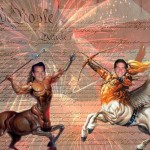
DON’T BELIEVE THE HYPE?

What The Critics Are Saying About Jay-Z’s ‘Magna Carta Holy Grail’
By Elizabeth Coady
JAY-Z’S JUST-RELEASED 12TH STUDIO ALBUM Magna Carta Holy Grail is triggering the usual outpouring of press for hip hop’s impresario of swagger. Yet through the din comes different opinions about the album’s artistic quality.
The Hov and his Mrs. hosted an album release party late Wednesday night for 500 friends, business associates and hangers-on at Brooklyn’s Liberty Warehouse. The new album officially goes on sale July 9 but one million copies were given away early Thursday on a glitchy mobile phone app for the Samsung Galaxy, marking the first time that an album went platinum before its official release.
Here’s a sampling of what critics are saying:
USA Today declares the album reveals Hova’s “epic aspirations” which it contends he largely reaches.
The breadth of his subject matter — which also touches on family, loyalty, spirituality and fame — is matched by his lyrical acuity,” writes Steve Jones. “His perspective is that of someone who has achieved much but hasn’t lost sight of what brought him to this point. With platinum status guaranteed even before his album goes on sale July 9, he could have just mailed it in. But he stays on top, because he refuses to do anything less than epic.
The Los Angeles Times takes the rapper to task for his braggadocio, calling the album “full of empty boasts” that leave you with “an empty feeling.”
Over a 16-song album that could have been cut to a dozen, Jay namedrops Julius Caesar, Pablo Picasso, Lucky Luciano, Mark Rothko, Billie Holiday, Jean-Michel Basquiat (and his graffiti alter-ego SAMO), Kurt Cobain, Michael Jackson and the “Mona Lisa,” writes Randall Roberts, the paper’s pop music critic. “…But to what end? Other than to amaze us with his opulence, good fortune and undeniable skills, the answer is elusive. Despite its name, Magna Carta Holy Grail seems unconcerned with delving too deeply into either the democracy or the faith that the two objects symbolize….
Magna Carta Holy Grail certainly is shimmering, heavy and at times sonically stunning, and Jay-Z can toss a brilliant metaphor like it’s nothing. But a true masterpiece harnesses intellect and adventure to push forward not only musically but also thematically.
That’s a nice way of questioning whether Jay-Z’s music is maturing along with his CDs (in this case, certificates of deposit). But Daily Beast minces no words in issuing its verdict, calling the new album “an overhyped mess” that “doesn’t hold a candle to Kanye West’s Yeezus.
“The song Jay-Z Blue, about being a father to daughter Blue Ivy, is a prime example of everything that’s wrong with the album. What should have a been a poignant tune about the rapper trying to be a better dad than his own father, rapping, ‘Father never taught me how to be a father / Treated mother I don’t wanna have to just repeat another leave another,’ devolves into an overproduced smorgasbord filled with nursery rhyme jingles and samples from the horror film Mommie Dearest. In fact, the bulk of Magna Carta, which was mainly produced by Timbaland, feels overproduced…. Whereas Magna Carta sounds like a collection of tired jet-set raps over random beats strung together, Yeezus sounds like a unified whole—a minimalist treasure dripping with anti-corporate vitriol.
The New York Times‘ Jon Pareles delivers faint praise, saying that although Timbaland’s productions “hold some sly surprises,” the recording “comes across largely as a transitional album, as if Jay-Z has tired of pop but hasn’t found a reliable alternative.”
He also echoes other reviewers who take Hov to task for his obsessive accounting of his possessions.
“Jay-Z boasts his usual boasts; he praises how “special” his flow is, and he compulsively lists acquisitions, destinations and celebrity pals. We get to hear again about his Basquiats, his Maybach, his Lamborghini and his Hublot watch, and he compares himself yet again to Michael Jackson and Muhammad Ali. He also touts the corporate expansion of his Roc Nation into sports management. He now aspires to becoming a billionaire. “I crash through glass ceilings, I break through closed doors,” he exults in Oceans. But on this album, the music often tells a different story: less vainglorious, more ambivalent.”
Billboard turns out a track-by-track review but sums up the effort by saying:
“As an event, it’s good, it’s great, it’s disappointing and back again. As an album, though, it tends to be safe. He’s surrounded by friends, in the commercials and on the tracks: there’s Beyoncé, Pharrell Williams, Swizz Beatz, Nas, Rick Ross, Frank Ocean, Timbaland and Justin Timberlake. It’s in the same vein as Watch The Throne
Finally, we’ll let have MTV’s Rob Markman have the last word:
“During it’s two-week build up, innovative rollout and clever ad campaign Magna Carta Holy Grail promised something new and inventive to one million Galaxy smartphone users, though it is unclear to what degree it actually delivered. No matter the case, what the album actually contains is the same old recipe which has made Jay-Z so brilliant beginning with his 1996 debut Reasonable Doubt.
If Magna Carta proves anything it’s that no matter how futuristic your music distribution methods becomes, banging beats and choice rhymes will always remain timeless.”
What’s your take?